Routines
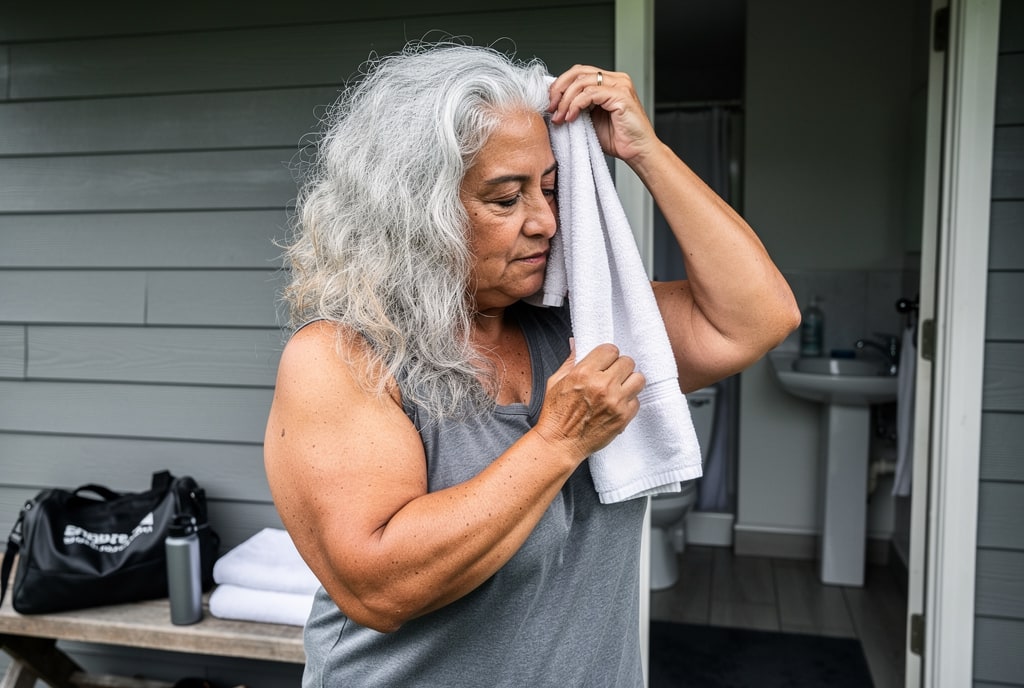
Gym
Gym guidance for grey hair, with practical care steps, salon context, routine choices, and confidence-focused next steps.
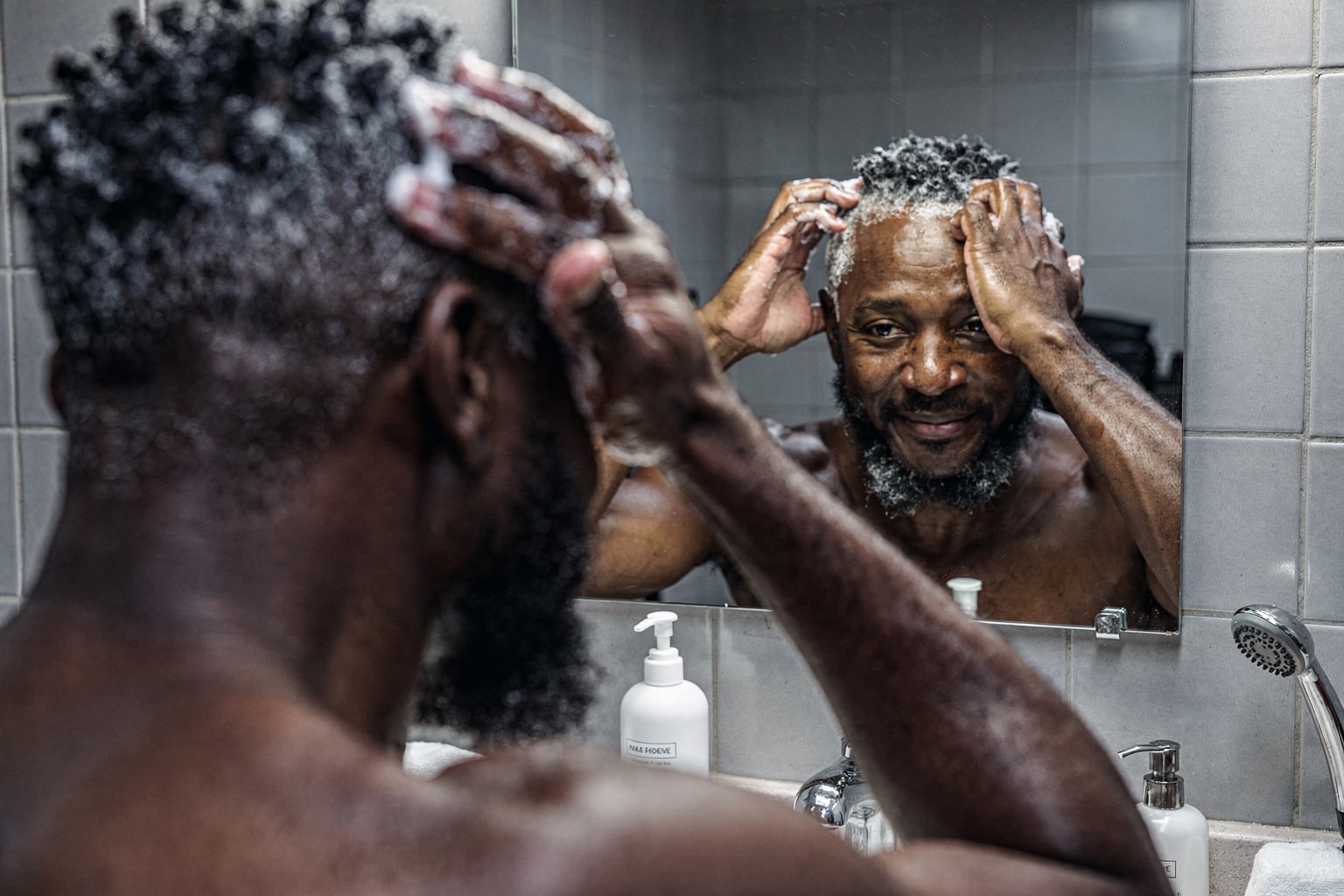
Grey Hair
Routines - Updated July 2026
Plan a grey hair wash day that cleanses gently, manages yellow tone, restores slip, protects texture, and avoids buildup.
Updated July 2026. We revise grey hair wash day when product options, routine advice, or the supporting evidence changes. How we update guides.
Grey hair wash day should reset the scalp, refresh the tone, restore slip, and set up the style without creating the next round of dryness or buildup. It does not need to be elaborate. The best wash day is structured enough that you know why each step is there, but flexible enough to change when the hair is already clean, the scalp is sensitive, or the tone does not need correction.
Grey and white hair can reveal everything that happens on wash day: minerals, leftover styling cream, purple pigment, rough cuticle, dry ends, or a conditioner that is too heavy for the roots. A thoughtful routine helps you separate cleansing, conditioning, tone control, and styling instead of treating every wash as a full correction project.
Before turning on the water, choose the goal. Is this a normal cleanse, a buildup reset, a tone-control wash, a moisture-focused wash, or a post-swim or post-travel wash? The goal determines the products. If you use purple shampoo when the hair only needs moisture, it may look smoky and still feel dry. If you use a rich conditioner when the hair is coated, it may feel softer for a day and dull by tomorrow.
Look at the scalp and lengths. Is the scalp oily or itchy? Are the ends tangled? Does the silver look yellow, beige, smoky, or simply dull? Did you use heavy styling products, sunscreen, dry shampoo, or heat since the last wash? Did you swim or spend time around smoke? A wash day that answers those questions will be more effective than one copied from a routine that has different hair.
Detangle only as much as your texture allows before washing. Straight and wavy hair may benefit from gentle brushing or combing from the ends upward. Curly and coily hair may prefer finger detangling with water or conditioner in the shower. Do not rip through dry knots, especially on pale ends that show breakage.
If your hair tangles badly, apply a small amount of conditioner or detangling product to the ends before washing, or section the hair. For long grey hair, loose sections can prevent matting. For short cuts, focus on scalp access and avoid scrubbing the lengths into knots.
Pre-wash oils are not a universal answer for grey hair. Some people like them for slip, but heavy oils can be difficult to rinse and may make silver hair look darker or coated. Broader oil comparisons belong on specialist resources; here the grey-specific test is simple: does the step improve wash-day softness without dulling the silver or irritating the scalp?
Shampoo belongs mainly on the scalp. Use fingertips, not nails, and work in sections if the hair is dense. Let the lather run through the lengths rather than roughing up the ends. Rinse thoroughly because leftover cleanser or loosened residue can make grey hair look dull.
Choose the cleanser by need. A gentle shampoo works for most wash days. A clarifying or chelating wash may help when hair feels coated, limp, mineral-heavy, or dull from chlorine, smoke, sunscreen, or product film. A purple shampoo is for yellow tone, not ordinary cleansing. A moisturizing shampoo can help dry-feeling hair, but if it leaves roots flat, use it more selectively.
If the scalp is itchy, painful, flaky, or irritated, do not keep escalating cosmetic products. Adjust gentleness and seek professional advice when symptoms persist or worsen.
Tone control should come after you decide the hair is actually yellow. Check in daylight when possible. Warm indoor light can make silver hair look beige. Product buildup can mimic dull yellow. Old dyed ends may be orange or warm brown rather than yellow-white.
When purple shampoo is appropriate, start conservatively. Use short contact time, focus on the yellow areas, and rinse well. Porous white ends can grab pigment fast. If the hair turns lavender, smoky, or flat, pause pigment products and return to gentle cleansing for a while. If purple shampoo never improves the tone, the issue may be minerals, old dye, or damage rather than a simple yellow cast.
For more controlled color adjustment, a salon toner or gloss may be better than repeated home pigment. Review purple shampoo and toners in grey-specific context before adding both to the same routine.
Conditioner is where many grey wash days improve. Apply where the hair needs slip: usually mid-lengths and ends, sometimes higher for curly or coily textures. Use enough to detangle without coating the roots unless your hair and scalp tolerate that. Give conditioner time to work, then rinse according to the result you want. Some textures prefer a very thorough rinse; others like a small amount of residual slip.
If hair still feels rough, ask why. The conditioner may be too light. The ends may be porous or damaged. Water may be too hot. You may be clarifying too often. Heat styling may be undoing the softness. A deeper conditioner can help occasionally, but it should not be used to avoid trims when ends are beyond saving.
Grey hair that is fine and low-density may need lightweight conditioner more often than heavy masks. Thick, wiry, curly, or coily grey hair may need richer formulas and sectioned application. Match the conditioner to the strand and density, not to the idea that all silver hair is the same.
Rinse thoroughly enough that the hair does not feel slick in a coated way, unless your texture intentionally uses leave-in residue. Warm water is practical; very hot water can make the scalp and lengths feel drier. After rinsing, squeeze water out gently. Avoid rough towel rubbing. A microfiber towel, soft T-shirt, or gentle squeeze can reduce frizz and breakage.
Drying method shapes the final look. Air-drying can protect from heat but may need styling support to prevent frizz or flatness. Blow-drying can create polish and lift but needs heat protection and moderate temperature. Diffusing can support curls and waves. The best method is the one that gives you a repeatable result without excessive stress.
Post-wash styling should support the cut and texture. Use a leave-in for slip, a styling cream for surface control, a mousse or foam for volume, or a heat protectant before hot tools. You do not need all of them every wash. Apply products in small amounts and add only where the hair needs them.
Fine grey hair often looks best when roots stay clean and products are concentrated on ends. Wiry grey hair may need a light cream smoothed over the surface. Curly and coily grey hair may need sectioned product application and a drying method that preserves pattern. If the hair looks darker or dull after styling, reduce product amount or switch formulas.
Use this template and adapt it.
| Step | Normal wash | Buildup wash | Tone wash |
|---|---|---|---|
| Pre-check | Scalp comfort and tangles | Product film, minerals, chlorine | Confirm yellow tone |
| Cleanse | Gentle shampoo | Clarifying or chelating cleanser | Purple shampoo used conservatively |
| Condition | Match density and texture | Replenish slip after deeper cleanse | Condition well after pigment |
| Dry | Low friction method | Avoid heavy styling buildup | Judge tone in daylight after drying |
| Review | Day-two softness and scalp | Whether brightness improved | Watch for smoky over-deposit |
Do not stack buildup wash, strong purple shampoo, deep mask, and high heat automatically. If the hair needs several corrections, stage them across washes.
Wash frequency should follow scalp and lifestyle. If you work out, use heavy products, live in humidity, or have an oily scalp, more frequent gentle washing may be right. If your scalp is dry and your style holds, longer spacing may work. The goal is not to wash as little as possible; it is to keep the scalp comfortable and the hair manageable.
Between washes, refresh with water, gentle detangling, a small amount of leave-in, or a style change. If dry shampoo makes silver hair look dusty, use less or wash sooner. If day-three hair looks better than day one, your wash-day products may be too heavy or your drying method may need adjusting.
If hair is clean but dull, check product amount, rinse quality, minerals, and heat. If it is bright but dry, increase conditioning and reduce harsh cleansing. If it is soft but flat, lighten conditioner or keep it away from roots. If it is yellow, clarify first, then tone carefully. If it is smoky or lavender, pause purple products. If it tangles immediately, improve slip and consider trimming rough ends.
Keep notes for two to four washes. A single wash can be affected by weather, water, products, and styling. Patterns tell you more than one result.
Some wash days need a special reset because the environment changed the hair. Hard water can leave minerals that make grey hair feel coated or look beige. Swimming can add chlorine or mineral exposure. Smoke, pollution, sunscreen, and heavy dry shampoo can sit on pale strands and make them look dull. In these cases, a normal gentle shampoo may not fully reset the hair.
Use clarifying or chelating products carefully and according to directions. Follow with conditioner because deeper cleansing can leave ends feeling exposed. Do not combine every strong step at once unless a professional has advised it. If hard water is constant, consider prevention, such as rinsing thoroughly, using a suitable periodic reset, or addressing the water source, rather than escalating purple shampoo.
A wash day is not successful only because the hair looks good while freshly dried. Check the next morning. Are roots comfortable? Do ends still have slip? Did silver pieces stay bright, or did they turn smoky from too much pigment? Did the hair collapse from heavy conditioner? Did curls or waves hold without crunch or frizz? Day-two results tell you whether the routine is balanced.
If day one is beautiful and day two is flat, use less product or rinse more thoroughly. If day one is clean but day two is dry, improve conditioning or reduce harsh cleansing. If day two is itchy, review scalp products and wash frequency. A routine that lasts is usually better than a dramatic reset that fails quickly.
It is tempting to make every wash day a project, especially when silver hair feels unpredictable. Keep at least one regular wash day boring: gentle shampoo, conditioner, low-friction drying, and the styling products you already trust. This gives you a baseline. Then, when you add purple shampoo, clarifying, a new conditioner, or a styling cream, you can actually tell what changed.
Boring is not careless. It is controlled. Grey hair often improves when the routine becomes easier to read.
The most useful wash-day question is not “What routine should I do?” It is “What is this wash responsible for?” Grey hair shows the difference between a normal wash and a correction wash. If you try to make one wash cleanse, chelate, tone, deeply condition, reshape, and heat-style aggressively, the result may be too much even if every product is good.
Use one primary goal:
| Wash-day goal | Use when | Keep gentle by |
|---|---|---|
| Normal cleanse | Scalp needs refreshing and tone is acceptable | Gentle shampoo, conditioner, familiar styling |
| Moisture wash | Ends feel rough or tangly but hair is not coated | Mild cleanse, richer conditioner, low heat |
| Buildup reset | Hair feels heavy, dull, mineral-like, or product-coated | Clarify or chelate as directed, then condition |
| Tone wash | Yellow cast remains after normal cleansing checks | Purple shampoo with short contact time |
| Scalp-comfort wash | Scalp is oily, sweaty, itchy, or uncomfortable | Focus cleanser on scalp and avoid irritating layers |
Secondary goals can be present, but they should not take over. A buildup wash still needs conditioner. A tone wash still needs slip. A moisture wash still needs a clean scalp. The point is to avoid making every step strong. If the hair has several problems, stage corrections across more than one wash.
This is especially important for people transitioning from dye. New grey roots, blended mids, and old porous ends may not need the same routine. The roots may only need gentle cleansing while the ends need slip. The white pieces may tone quickly while warm dyed ends barely respond. Matching one primary goal keeps the wash from becoming a fight with every part of the head.
Shampoo works best when it reaches the scalp evenly. Dense hair, long hair, curly hair, coily hair, and short thick cuts may all benefit from sectioning. You do not need a formal salon parting. Simply lift the hair and apply cleanser at the scalp in a few zones: front hairline, crown, sides, nape, and any area that collects sweat or product.
Use fingertips and pads, not nails. Let the shampoo loosen oil and residue at the scalp, then let the lather move through the lengths as you rinse. Scrubbing the lengths together can create tangles, especially on grey hair that is already dry, porous, curly, or fine at the ends. If the lengths have heavy product, squeeze lather through them gently instead of rubbing.
Rinse longer than you think. Grey hair can look dull when shampoo, loosened film, or minerals remain near the surface. Lift the hair at the crown and nape so water reaches the scalp. If the hair is thick, section while rinsing too. A careful rinse is a maintenance step, not an afterthought.
A second shampoo is not automatically wrong, but it should have a reason. If the first cleanse barely lathers because of oil or product, a second gentle cleanse may leave the scalp cleaner. If the hair already feels clean, repeating shampoo can make ends feel exposed. Let the scalp and product history decide.
If scalp symptoms persist, keep the boundary clear. Cosmetic routine changes can help with ordinary oil, sweat, or mild product discomfort, but ongoing pain, sores, heavy flakes, sudden shedding, or patchy changes deserve professional guidance rather than stronger wash-day experiments.
Clarifying and chelating are often grouped together in conversation, but the maintenance question is simple: what kind of film are you trying to remove? Styling product, dry shampoo, oils, and some silicones may need clarifying. Mineral buildup from hard water or pool exposure may need a chelating product designed for that purpose. A normal gentle shampoo may not remove every film, but a strong reset is not needed every week for everyone.
Grey hair can look beige, flat, or resistant to conditioner when buildup is present. It may also feel strangely clean and coated at the same time. Before reaching for purple shampoo, ask whether the hair needs a reset cleanse. If the hair brightens after clarifying, the issue was not primarily tone.
Follow directions closely. More contact time is not automatically better. Stronger cleansing can leave porous ends feeling rough, so plan conditioner afterward. If the hair is long or the ends are old color, consider applying the reset mainly where buildup lives and being gentler with fragile ends. If hard water is constant, the hard water and grey hair guide can help you think about prevention rather than endless correction.
Do not combine every strong step in one shower unless a professional has advised it for your hair. Clarifying, chelating, purple shampoo, deep masks, and high heat all have a place, but stacking them can make it hard to know what helped and what created dryness.
Purple shampoo belongs to a tone wash. It is not the default way to clean grey hair. Use it when yellow cast is visible in daylight after you have considered buildup, lighting, old dye, and environmental exposure. If the hair is dirty or coated, cleanse or reset first; pigment over film often gives a dull result.
Apply purple shampoo with placement in mind. If only the front white pieces look yellow, you may not need to saturate the whole head for the same length of time. If ends are porous, they may grab quickly. If roots are natural grey and ends are old warm dye, they may respond differently. Start with short contact time and increase only if your hair clearly tolerates it.
Rinse thoroughly and condition well afterward. Purple shampoo can leave hair feeling less soft than a gentle cleanser, especially if it is used often. If the hair turns lavender, smoky, or darker than you want, pause pigment products. A few normal washes may be enough for mild over-deposit to soften. Repeating purple shampoo to “fix” a smoky cast usually makes the problem worse.
When purple shampoo is not giving the result you want, step back. The issue may be minerals, heat stress, old color, or uneven porosity. Review purple shampoo for grey hair for category-specific use, and consider toners for grey hair only when a more controlled color step makes sense. Tone products are helpful tools, not proof that the wash day is complete.
Conditioner should match the current hair, not the hair you had ten years ago and not the idea that all grey hair is coarse. Some silver hair is fine and easily flattened. Some is thick, wiry, curly, or coily and needs generous slip. Some heads contain both: soft grey roots with dry dyed ends, or a bright face frame with denser darker-grey areas underneath.
Apply conditioner where tangles and roughness happen. For many people, that means mid-lengths and ends. Curly and coily textures may need conditioner higher up and in sections so the pattern can be detangled gently. Fine hair may need conditioner kept away from roots. Long hair may need more time at the oldest inches. Short hair may need only a small amount and a very thorough rinse.
Give conditioner enough contact to do its job. Rushing this step often leads to aggressive detangling later. Use fingers or a wide-tooth comb only if your texture responds well. Detangle from ends upward. If the hair resists, add water and conditioner rather than force. Pale strands make breakage easier to notice, but the goal is not fear; it is patience.
If your conditioner never gives enough slip, look at conditioners for grey hair before adding several leave-in layers after the shower. If the conditioner gives slip in the shower but the hair dries rough, the issue may be rinsing, towel friction, heat, product choice, or ends that need trimming.
Rinsing conditioner is a texture decision. Some fine or straight grey hair needs a thorough rinse so the roots stay airy and the silver reflects cleanly. Some curly, coily, or wiry grey hair benefits from leaving a little slip behind or following with a leave-in. The right rinse leaves the hair manageable without looking coated.
Use feel as the guide. If hair feels slippery in a coated way and later turns dull or flat, rinse more or use a lighter conditioner. If hair feels squeaky, rough, or tangled immediately after rinsing, rinse less aggressively, choose a richer formula, or use a leave-in. The answer may also change by season. Winter air, scarves, and indoor heat can make ends need more slip. Summer sweat and sunscreen may make roots need a cleaner finish.
Grey hair that is very pale can show conditioner residue as darkness or beige cast. That does not mean conditioner is bad; it means amount and placement need refinement. Apply less near the roots, emulsify with more water, or switch to a formula that gives slip without visible film.
Drying is not just removing water. It sets the surface, volume, curl pattern, and amount of friction the hair experiences after washing. Grey hair often looks more polished when drying is deliberate, even if the final result is natural.
For straight or smooth styles, squeeze water out gently, use a soft towel, and avoid rough rubbing. If blow-drying, use heat protectant and moderate heat. Lift roots if volume matters, then smooth lengths without repeatedly pulling the same face-framing pieces. A cool shot can help set the shape. If flat irons or curling irons follow, make sure the hair is fully dry first.
For wavy hair, apply product while the hair is wet enough to clump, then scrunch or clip as needed. Touch less while it dries. Breaking the pattern while damp can create frizz that is then blamed on grey texture. For curly hair, sectioned product application and diffusing or careful air-drying may preserve shape. For coily hair, drying may involve a protective style, twists, stretch method, hooded dryer, or air-dry plan that suits the hair and scalp.
Heat protection belongs in the routine whenever heat is used. If your current product feels sticky or dull on silver hair, compare heat protectants for grey hair and use the least product that gives even coverage. Heat tools should solve a styling goal, not correct avoidable wash-day friction.
Post-wash styling should be easy to understand. Start with the product that supports health and slip, then the product that supports shape, then finishing only if needed. For many grey routines, that means leave-in or detangler first, styling cream or mousse second, heat protectant before tools, and a finishing product only on dry hair if the surface still needs it.
Do not use every category automatically. Fine grey hair may need a leave-in spray and root lift, not cream through the scalp. Wiry grey hair may need a flexible cream on the surface and ends. Curly grey hair may need a curl cream or gel used in sections. Coily grey hair may need a leave-in and styling method that preserves moisture and shape. Short cuts may need a pea-sized amount of paste or cream, but too much can make silver look heavy.
Check product color, residue, and scent. Pale hair can reveal amber creams, powdery dry shampoo, and sticky sprays. If a product makes the hair feel better but look dull, try less, apply lower, or save it for styles where clarity matters less. If a product irritates the scalp, remove it from the routine even if it creates a nice finish.
When surface control is the main issue, styling creams for grey hair can be useful. When tangling between washes is the issue, a leave-in may be a better starting point. The point is to choose by the problem, not by the number of steps in someone else’s wash day.
Life changes wash day. A sweaty workout, humid commute, pool day, smoky room, sunscreen-heavy beach day, or hotel shower can make grey hair feel different. These are not signs that the whole routine failed. They are special conditions that may need a special reset.
After workouts, decide whether the scalp needs a full wash, a rinse, or a refresh. If sweat dries on the scalp and creates itch or odor, washing sooner may be kinder than stretching the schedule with dry shampoo. The gym routine for grey hair can help you decide what belongs after exercise and what can wait.
After swimming, rinse before and after exposure when possible, cleanse as needed, and condition well. Chlorine, minerals, and sun can all affect silver hair. The guide to sun and chlorine exposure is useful if summer or pool water regularly changes your tone or texture.
After travel, be patient. Different water, dry air, hotel shampoo, extra sunscreen, and unfamiliar styling conditions can make hair feel coated or dry. Use the simplest trusted wash day first. If the hair still feels wrong, then consider a buildup reset. A trip is not the best time to test a strong purple product for the first time.
A bad wash day does not require panic. First identify what went wrong. If the hair is smoky or lavender, pause purple products and return to gentle cleansing. If it is flat and greasy, product amount or conditioner placement may be too heavy. If it is dry and rough, the cleanser may have been too strong, the water too hot, the conditioner too light, or the drying method too harsh. If it is still yellow, the issue may be buildup, old color, or a tone product that needs different placement.
Avoid fixing everything immediately. Washing again the same day, clarifying, toning, masking, and heat styling can make a minor problem larger. Choose the least aggressive correction that matches the issue. Flat roots may need time, a part change, or a lighter next wash. Dry ends may need a small amount of leave-in and lower friction until the next wash. Smoky tone may simply need pigment paused.
Use the next wash as information. What did you change? Did you use more product than usual? Did you leave purple shampoo on longer? Did you clarify without enough conditioner? Did you rough-dry because you were rushed? Grey hair care becomes calmer when a bad wash day becomes data instead of a reason to overhaul the shelf.
Freshly dried hair can be misleading. Some routines look beautiful for three hours and fail by morning. Others look modest on day one and wear beautifully through day three. Judge wash day after the hair has slept, moved, touched clothing, and lived through normal air.
On day two, ask whether the scalp is comfortable, roots have reasonable lift, ends still separate without catching, tone looks clear in daylight, and the style can be refreshed without heavy correction. If the answer is mostly yes, the wash day worked even if every strand is not perfect. If one answer is consistently no, adjust that category.
A day-two review also tells you whether night care belongs in the routine. If the hair tangles, flattens, or frizzes overnight, the wash products may not be the only issue. A satin pillowcase, loose braid, bonnet, wrap, or different drying finish may reduce the next morning’s work. The overnight routine for grey hair connects wash-day results to what happens while you sleep.
Grey hair wash day works best when it has a goal: cleanse, reset buildup, control tone, restore moisture, or prepare a style. Choose products for that goal, handle the hair gently, and judge the result in normal light after the hair is fully dry. For everyday maintenance between washes, use daily care for grey hair. For established silver routines, continue with silver hair maintenance.
Wash grey hair as often as your scalp, styling products, exercise, and texture require. Comfort and buildup matter more than a fixed schedule.
No. Purple shampoo belongs in the routine when yellow tone is visible, not as an automatic step every wash.
Grey hair may feel dry after washing because the cleanser is too strong, water is too hot, conditioner is too light, ends are porous, or heat and friction are adding stress.
Clarify first only when the hair feels coated, mineral-heavy, or dull from product film. If the hair is simply yellow and otherwise clean, use purple shampoo conservatively without stacking extra strong steps.
Gym guidance for grey hair, with practical care steps, salon context, routine choices, and confidence-focused next steps.
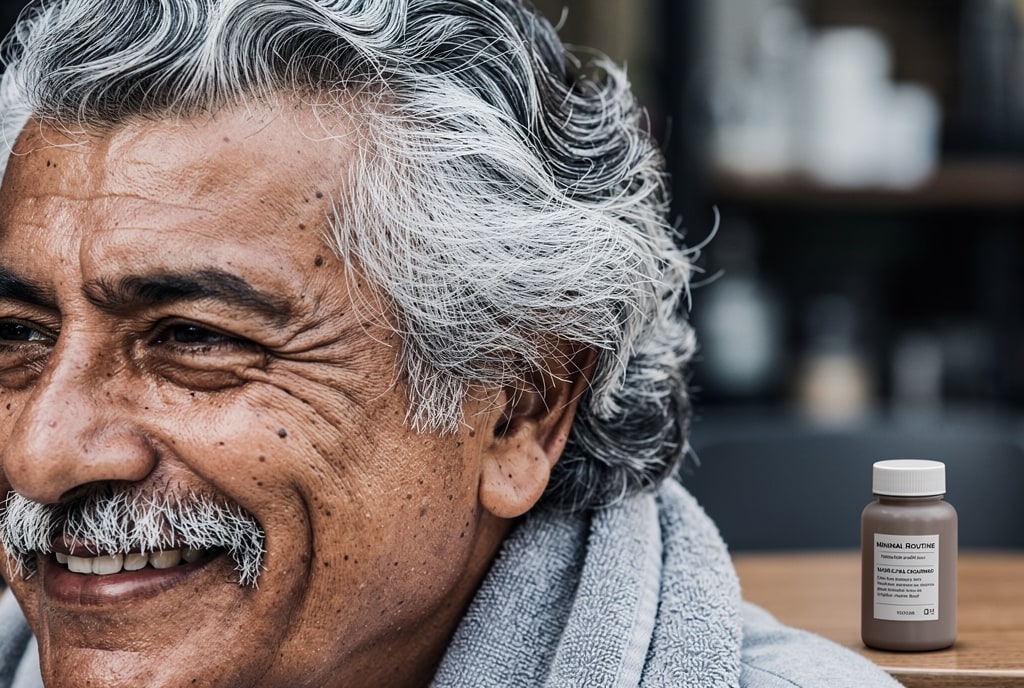
Minimal Routine guidance for grey hair, with practical care steps, salon context, routine choices, and confidence-focused next steps.
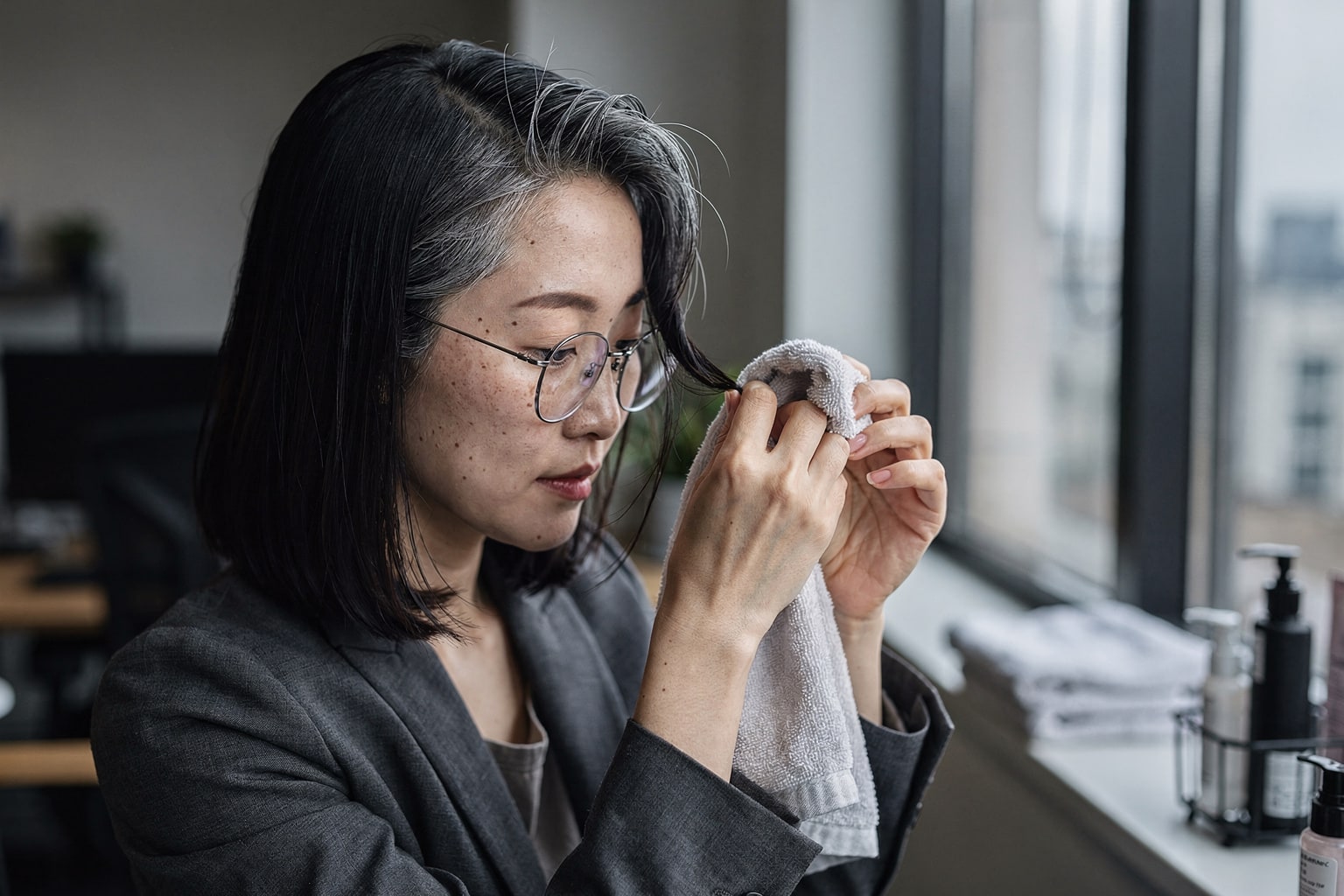
Overnight guidance for grey hair, with practical care steps, salon context, routine choices, and confidence-focused next steps.
Grey hair care notes — transition tips, science, and silver routines