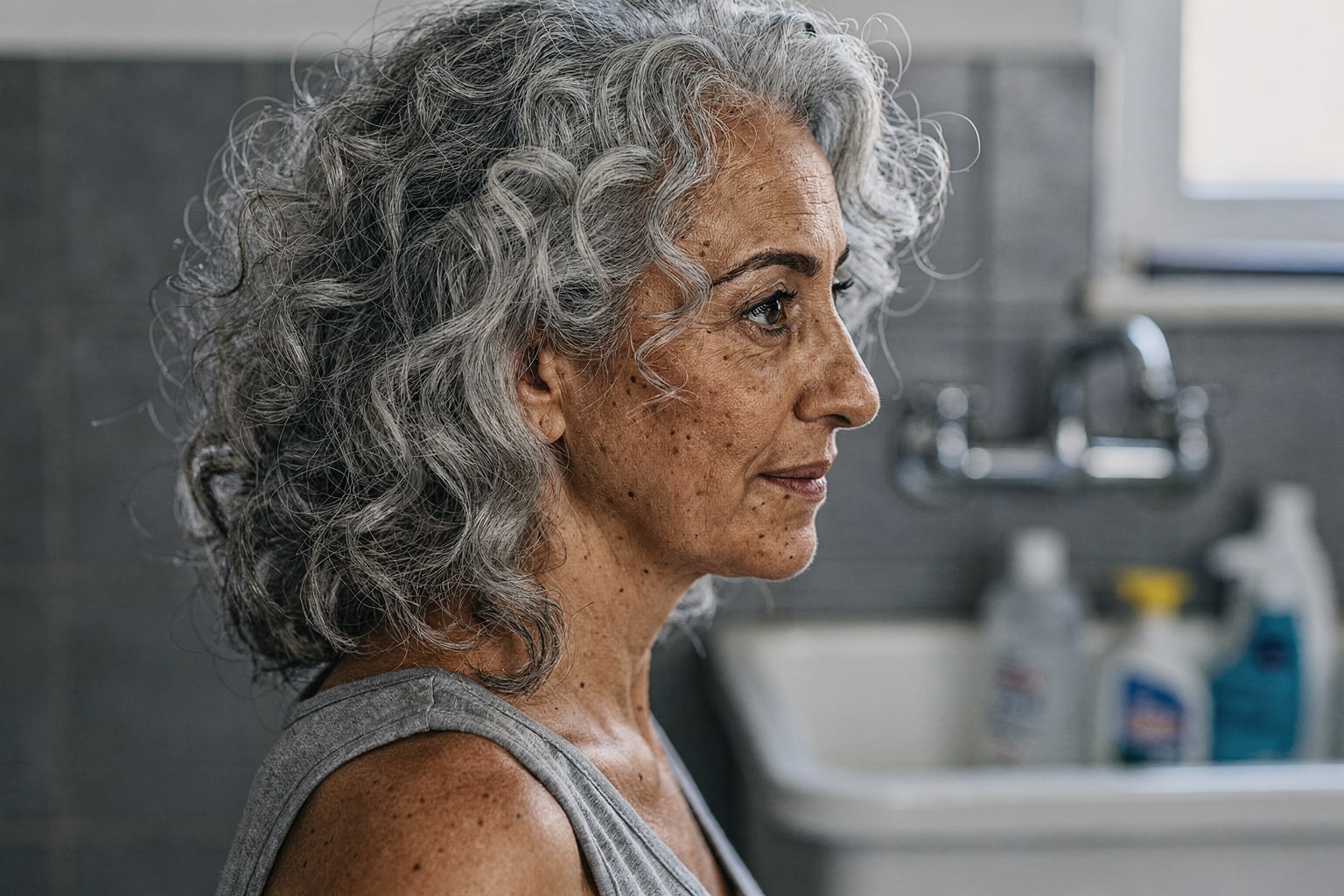
Embrace
Daily Care for Grey Hair
Create a daily grey hair care routine for softness, shine, tone control, scalp comfort, heat protection, and easy styling.

Grey Hair
Embrace - Updated July 2026
Maintain silver hair with realistic tone control, moisture, cut planning, heat protection, and routines that keep grey hair bright.
Updated July 2026. We revise silver hair maintenance when product options, routine advice, or the supporting evidence changes. How we update guides.
Silver hair maintenance is the care that keeps grey and white hair looking clear, soft, and intentional after the transition is no longer the main story. It is not about chasing a perfect icy tone every day. Real silver hair changes under warm indoor bulbs, bright sun, office light, humidity, minerals, and styling products. A good maintenance routine gives you a steady baseline so you can tell the difference between a true tone problem, a dryness problem, and a temporary lighting problem.
The best silver routines are conservative. They clean the scalp without stripping, condition the lengths without coating, control yellow tone only when needed, and protect the hair from heat and environmental dulling. They also account for density and texture. Fine silver hair may need lightweight slip and root lift. Coarse, curly, coily, or wiry silver hair may need richer conditioning and gentler detangling. Maintenance is not one shelf; it is a repeatable system.
Silver and white hair can look bright because it reflects light strongly, but that same reflectiveness makes dullness, yellowing, and frizz more visible. Without melanin, the strand may also appear more translucent, so residue and warmth show quickly. The hair may feel drier because of age, old color damage, styling habits, scalp changes, or lifted cuticle. It may not be identical from root to end, especially if the transition included permanent dye or highlights.
Start with four maintenance goals: clean scalp, soft lengths, controlled tone, and supportive shape. If one of those is missing, the hair can look off even when the other three are handled. Bright tone will not compensate for ragged ends. A beautiful cut will not hide product film forever. Heavy conditioner may soften the hair but make silver roots look flat. Think in systems, not single miracle products.
A silver hair wash rhythm should match scalp comfort first. Some scalps feel best with frequent gentle cleansing. Others need more spacing to avoid dryness. The mistake is choosing a schedule only because a silver-hair routine online says to wash once a week or every day. Your scalp, styling products, exercise, climate, and density matter more.
Use a gentle shampoo as the default. Keep clarifying for specific buildup moments: hard-water dullness, heavy styling product, chlorine exposure, sunscreen transfer, or hair that stays limp after washing. Clarifying too often can leave the hair rough, especially if the ends are porous. If you need regular mineral control, consider whether a shower filter or occasional chelating product is appropriate before increasing purple shampoo.
Condition from mid-lengths to ends unless your texture needs more. Fine hair may prefer a light conditioner rinsed thoroughly. Coarse or wiry hair may need a richer conditioner and a leave-in. Curly and coily grey hair often benefits from slip and sectioned detangling because dry friction can make silver hair look frizzier than it is.
Purple and blue-violet products can be useful, but they are maintenance tools, not identity markers. Purple pigment helps neutralize yellow cast. It does not repair damage, restore melanin, or make every silver head brighter when used more often. Overuse can make grey hair look smoky, flat, lavender, or darker than intended, especially on porous white ends.
Before toning, ask whether the issue is truly yellow. Dull grey can come from product film, minerals, dryness, or lighting. Orange or beige warmth in old dyed ends may not respond like pure yellow grey. If the hair is dirty or coated, clarify gently and reassess in daylight. If the grey still looks yellow, test purple shampoo with short contact time and space out uses.
| Tone issue | First check | Better next step |
|---|---|---|
| Pale yellow on white pieces | Product film or minerals | Clarify, then use purple shampoo sparingly |
| Smoky or lavender cast | Over-deposit | Pause pigment and use gentle cleansing |
| Warm old dyed ends | Previous color history | Ask about gloss, toner, or cutting strategy |
| Overall dullness | Dryness, heat, or coating | Improve conditioning and reduce buildup |
Silver hair maintenance often fails when tone gets all the attention and feel gets ignored. Hair that is bright but brittle does not look healthy. Softness comes from a mix of water, conditioning agents, smooth cuticle, low friction, and appropriate styling. It does not require every oil, mask, or butter in the cabinet.
For fine silver hair, use conditioner where the hair tangles and keep roots light. A leave-in spray or light cream can help with detangling without collapsing volume. For thick or wiry silver hair, use richer conditioner, detangle gently with fingers or a wide-tooth comb, and seal the style with a flexible product only where needed. If you want broader oil comparisons, that primary product intent belongs on specialist oil resources; here, the grey-specific question is whether any finishing product improves slip and shine without yellowing or coating the silver.
Watch the day-two result. If hair looks soft on wash day but greasy, dark, or separated the next morning, the routine is too heavy or not rinsed enough. If it looks bright but feels rough, you may need more conditioning or less heat.
Heat can make silver hair look yellowed, dry, or wiry when used aggressively. Blow-dryers, flat irons, curling irons, and hot brushes all add stress, especially on older lengths that went through color. Heat protection does not make high heat harmless, but it is a practical barrier when styling is part of your routine.
Use the lowest effective temperature and work on properly dried or prepared hair. Do not repeatedly pass a flat iron over the same white pieces. Keep hot tools clean because product residue on plates can transfer dullness. If you heat style often, review heat protectants for grey hair and consider a cut that works with your natural texture so you are not forcing the hair into submission every wash.
A strong cut is one of the most overlooked maintenance tools. Silver hair catches light, so unsupported ends, grown-out layers, and uneven density show quickly. Regular shape checks make the color look chosen. That may mean a sharp bob, soft layers, a pixie, long face-framing pieces, or a curly shape that removes bulk without thinning the wrong areas.
The right schedule depends on length and style. Short precision cuts may need shaping every four to six weeks. Medium cuts often hold six to ten weeks. Long silver hair may go longer, but the ends still need review because dryness and old color can make length look tired. If your current shape makes the hair feel older than you want, the issue may be proportion, not the grey itself. The grey hair cut guide can help you prepare for that conversation.
Silver hair picks up life. Smoke, pollution, minerals, chlorine, sunscreen, self-tanner, dry shampoo, and styling sprays can all affect tone or shine. If you swim, rinse before and after pool exposure and use a gentle cleanse afterward. If you live with hard water, watch for a beige cast or hair that feels coated even after washing. If you use sunscreen around the hairline, keep it off the lengths when possible and cleanse the face-framing pieces well.
Sun can also shift the appearance of silver hair. Protecting the scalp matters, especially where the part exposes skin. Hats, shade, and careful sunscreen placement are practical. The goal is not to fear the environment; it is to know why silver hair may look different after travel, summer, workouts, or a smoky room.
A simple weekly rhythm might look like this: one or two gentle washes, conditioner each wash, a leave-in or styling cream only if the hair needs slip or shape, heat protectant when styling, and purple shampoo only when yellow tone appears. Add clarifying occasionally when the hair feels coated, not as a punishment after every dull day.
| Frequency | Maintenance step | Decision rule |
|---|---|---|
| Every wash | Gentle cleanse and condition | Adjust richness by scalp and density |
| As needed | Leave-in or styling cream | Use when detangling or surface control is difficult |
| Every heat session | Heat protectant | Keep temperature moderate and passes minimal |
| Occasionally | Purple shampoo or gloss | Use only for visible tone need |
| Monthly | Photo and shape check | Compare in the same daylight |
Salon maintenance can include glossing, toning, trimming, blending leftover color, or reshaping. It is useful when home care cannot solve the problem or when you need precision. A gloss may add shine and tone control, but it is still a color service with upkeep. A toner can correct unwanted cast, but porous white hair can grab quickly. A trim can remove dull ends faster than any product.
Bring notes to the appointment: what products you use, how often you tone, whether the hair feels dry or coated, and photos in normal light. Ask how long the result should last and what to avoid afterward. If the stylist recommends frequent toning, ask whether the issue is environmental buildup, old color, or true yellowing of the grey.
Silver hair often needs small seasonal changes. In summer, sun, chlorine, sweat, sunscreen, and hard water can make pale strands look beige or dry. Rinse after swimming, protect the scalp where the part is exposed, and keep clarifying or chelating as an occasional reset rather than a weekly punishment. In winter, indoor heat, hats, scarves, and dry air can increase friction and static. You may need more leave-in on the ends, gentler detangling, or a softer sleep routine.
Travel can also disrupt silver hair. Different water, hotel shampoo, dry airplane air, and sunscreen transfer can change tone quickly. Pack a gentle cleanser, a conditioner you trust, and one tone product only if you already know how your hair responds. A trip is not the best time to test a strong purple formula for the first time.
Healthy silver hair does not have to look icy, glassy, or freshly blown out every day. A realistic goal is clean tone, comfortable scalp, flexible movement, and ends that do not look neglected. Some texture, wave, curl, or wiry surface is normal. The question is whether the hair looks cared for and feels manageable, not whether every strand lies flat.
Use comparison carefully. Studio photos, filtered social posts, and fresh salon images often show silver hair at its most controlled. Your daily hair has weather, sleep, work, exercise, and touch in it. A maintenance routine should improve ordinary days, not create disappointment because the hair does not resemble a one-hour blowout under perfect light.
Silver hair maintenance becomes easier when you stop treating every visible issue as a tone issue. Tone is the color cast: clear silver, pale yellow, smoky violet, beige, or old warm dye. Shine is how evenly light reflects from the surface. Softness is how the hair feels and moves. They often overlap, but they are not the same problem.
Hair can be bright and still feel rough. Hair can be soft and still look dull because it is coated. Hair can look yellow in one room and clean in daylight. Hair can look smoky because purple pigment has built up, not because it needs more toning. Naming the problem correctly keeps the routine calm.
Use this order when silver hair looks off:
| What you notice | What it may be | First maintenance move |
|---|---|---|
| Yellow in daylight after washing | True yellow cast or environmental stain | Tone conservatively or review causes |
| Beige, heavy, or limp | Product film, minerals, sunscreen, dry shampoo | Clarify or chelate when appropriate |
| Bright but rough | Dryness, heat stress, porous ends | Improve conditioning and reduce heat |
| Soft but flat | Product weight near roots | Use lighter placement and rinse better |
| Smoky or lavender | Purple over-deposit | Pause pigment and cleanse gently |
This table is not a diagnosis tool; it is a decision tool. It helps you choose the next gentle step instead of stacking cleanser, purple shampoo, mask, gloss, and heat in the same week. If the main issue is yellowing, the guide to brassiness causes gives a deeper way to separate pigment, buildup, minerals, heat, and old color.
A good silver routine has a baseline week: the ordinary version you can repeat without drama. It may include one or two washes, conditioner each time, one styling product, heat protectant if you use tools, and a short day-two review. The exact frequency is personal. The important part is knowing what normal looks like for your scalp and hair.
The baseline week should be boring enough that you can read changes. If you clarify, tone, deep condition, switch styling cream, and change drying method all at once, the result may be pleasant but hard to repeat. If the hair suddenly looks dull, you will not know which step caused it. Silver hair is reflective; small changes show.
Start by choosing:
That is enough for maintenance. Everything else is a special case. A special case can be hard water, travel, chlorine, a salon gloss, a winter dryness week, or a stretch of heavy styling. When the special case passes, return to the baseline instead of letting the emergency routine become the new routine.
If your baseline still feels unsettled, rebuild it from daily care for grey hair and grey hair wash day. Daily care tells you what happens between washes; wash day tells you whether the reset is doing its job.
Silver hair does not reject products, but it does reveal them. A cream that disappears into dark hair may make white ends look beige. A glossy serum may add beautiful polish to coarse silver hair and make fine silver roots collapse. A conditioner that softens wiry lengths may be too much for low-density hair near the scalp. Maintenance is often less about buying stronger products and more about placing ordinary products better.
Apply richer products where the hair is oldest, driest, or most exposed: usually mid-lengths, ends, nape, and face-framing pieces. Keep the root zone light unless your texture needs scalp-area conditioning and your scalp tolerates it. If you have fine or low-density hair, put product in the hands, touch the ends first, then use what remains near the surface. If you have thick, curly, coily, or wiry hair, work in sections so the product reaches the places that need slip instead of sitting on the outer layer.
Conditioner is the quiet foundation. If your rinse-out conditioner is not giving enough slip, daily products have to work too hard. Review conditioners for grey hair when dryness is a recurring maintenance issue. If the hair feels good after washing but tangles between washes, a light leave-in for grey hair may be the more practical bridge. If the surface looks wiry after drying, a small amount of styling cream for grey hair can help, but it should not be used to hide rough ends that need a trim.
Product color and scent can matter on very pale hair. Yellow, amber, or heavily fragranced formulas are not automatically wrong, but they deserve a daylight check. If the hair looks clearer when you skip a product, placement or formula is part of the maintenance problem.
Environmental dulling is a maintenance category, not a personal failure. Hard water can leave mineral film. Chlorine and pool minerals can make white pieces feel dry or look off. Smoke and pollution can cling to the surface. Sunscreen, self-tanner, makeup, and dry shampoo can transfer to the hairline. Silver hair simply makes these ordinary exposures easier to see.
Hard water often shows up as hair that feels coated even after washing, looks beige instead of clear, or refuses to respond normally to conditioner. Purple shampoo may make the tone cooler for a moment, but it will not remove every kind of mineral film. If hard water is a recurring issue, read the hard water and grey hair guide and consider prevention as well as occasional reset. Prevention may be as simple as rinsing thoroughly, using the right periodic cleanser, or addressing the water source when that is practical.
For swimming, wetting the hair before pool exposure and rinsing afterward can reduce how much the hair takes in. Use a gentle cleanse after exposure when needed, then condition well. For sunscreen transfer, keep oily or tinted products away from the lengths and cleanse face-framing pieces carefully. For dry shampoo, use less than you would on darker hair and brush or massage only as much as your texture allows.
Clarifying and chelating products have a place, but they should not become punishment. A deeper cleanse can leave porous silver ends feeling exposed, so follow directions and condition afterward. If you need a reset every few days, look for the source of the film instead of escalating the cleanser.
Home toning is most successful when it is specific. The hair is yellow in daylight, the scalp is comfortable, the hair is not heavily coated, and you know which areas need correction. That is when a purple shampoo, purple conditioner, mask, or gloss can be considered. If the hair is already smoky, lavender, dry, or flat, tone is not the next step.
Use contact time conservatively. Porous white ends can grab pigment fast. Virgin grey roots may respond differently from old highlighted ends. A strong purple formula may be useful for one person and too much for another. Start short, rinse well, and judge after the hair is fully dry in normal light. Wet hair can make pigment look stronger or weaker than it will be once dry.
Do not layer every tone product at once. Purple shampoo plus purple conditioner plus a pigmented mask can overwhelm hair that only needed a small correction. If you want to compare categories, purple shampoo for grey hair is the wash-based option, while toners for grey hair explains more controlled color adjustment. A toner or gloss can be useful, but it is still maintenance with trade-offs, not a permanent solution to every warm reflection.
If home toning never gives a clean result, stop repeating the same step. The warmth may be old dye, minerals, heat discoloration, or uneven porosity. A salon conversation may save the hair from repeated overcorrection.
Salon maintenance is not a defeat. It is useful when precision matters. Uneven old color, patchy yellowing, smoky over-deposit, a gloss that needs careful formulation, or a cut that has lost its architecture may be easier to address with a stylist than with another home experiment.
Before an appointment, collect real information. Take daylight photos from the same spot. Note your wash frequency, purple product use, heat routine, water concerns, and the last color service. Bring the products you suspect may be dulling the hair. Explain what you want the hair to look like on ordinary days, not only when it leaves the salon.
Ask direct questions: Is the issue tone, buildup, porosity, old dye, or shape? How long should the result last? What should I avoid for the first week? How often is too often for this service? Could a trim or shape adjustment solve more than a gloss? The grey hair salon consultation guide can help you prepare without turning the appointment into guesswork.
Salon glosses and toners can make silver hair look polished, but they are not free of upkeep. They can fade, grab differently on porous ends, or require specific home care. The best salon maintenance fits the life you actually want to live with your hair.
Silver hair that looks clear but feels brittle needs attention. Maintenance should protect the feel of the hair, especially if the lengths have survived years of dye, bleach, heat, or tight styling. Roughness can make silver look frizzy because the lifted surface scatters light.
Softness comes from a few ordinary habits repeated well. Use water that is warm rather than punishingly hot. Detangle with slip. Rinse enough that hair is not coated. Dry with low friction. Use heat protectant when styling. Trim ends that no longer respond. Sleep in a way that reduces tangles for your texture.
Do not make softness depend only on heavy masks. A mask can help occasionally, but if every wash requires a rescue treatment, the daily and weekly routine may be too harsh. Too much clarifying, too much purple shampoo, high heat, rough towels, and aggressive brushing can all undo a good conditioner.
If heat is part of your style identity, make it a maintenance category with rules. Choose moderate temperatures, work in clean sections, protect the hair first, and avoid repeated passes over face-framing white pieces. Review heat protectants for grey hair if your current product leaves the hair stiff, dull, or sticky.
A silver cut does not have to be severe, but it does need intention. Grey and white hair catch light along the edges, so shape drift becomes visible. A bob that has lost its line can look tired. Long layers that have thinned at the ends can make the color look less deliberate. A curly shape that has grown heavy in the wrong area can turn daily styling into a fight.
Between appointments, notice where the cut fails first. Does the crown collapse? Do the ends flip in an unplanned way? Does the nape tangle? Does the fringe separate? Do curls stack too wide or too flat? These notes are more useful than saying “my grey hair looks bad.” They tell the stylist what architecture needs support.
Maintenance does not always mean cutting shorter. It may mean cleaning the perimeter, reshaping face-framing pieces, adjusting layers, removing bulk carefully, or changing how the hair is dried. If your product routine keeps expanding because the shape no longer works, revisit the grey hair cut guide before adding another daily product.
For long silver hair, protect the ends as part of cut maintenance. Long hair can be beautiful in silver, but the last inches need to look cared for. If the ends are transparent, frayed, or permanently rough, no shine product will make them read as healthy for long.
Many silver routines still include old color. The roots may be natural grey, the mids may be blended, and the ends may be dyed. Salt-and-pepper hair may include dark strands that change how tone products look. White streaks may be more porous than steel-grey areas. Maintenance should respect the mix.
Do not expect one purple wash to affect every strand equally. White pieces may cool quickly. Darker grey may barely change. Old blonde or brown ends may hold warmth differently. Lowlights, glosses, and previous root smudges can also influence the result. If the hair is mixed, apply products more thoughtfully instead of saturating everything by habit.
Mixed silver often benefits from shape and styling as much as tone. Waves can blur old color lines. A stronger perimeter can make salt-and-pepper hair look intentional. Face-framing can decide whether the overall look reads bright or heavy. During a grow-out, use maintenance to protect the new grey while keeping old ends presentable until they are cut, blended, or grown out.
If you are still in that in-between stage, the grey hair grow-out plan may be more useful than a pure maintenance article. Established silver care begins when the main challenge is upkeep rather than transition strategy, but many people live between those categories for months.
Silver hair maintenance should evolve slowly. A monthly review is enough for most people. Choose the same lighting, take a quick photo if that helps, and ask four questions: Is the scalp comfortable? Do the ends still have slip? Does the tone look clear in daylight? Does the shape support the way I style my hair?
If the answer is yes, do not change the routine because a new product trend appears. If one answer is no, choose the smallest relevant adjustment. Scalp discomfort may need a wash-frequency or product change. Dry ends may need conditioner, leave-in, heat reduction, or a trim. Dull tone may need cleansing before pigment. Shape problems may need a cut conversation.
Seasonal reviews are useful too. Summer may bring sunscreen, swimming, sweat, and sun. Winter may bring hats, static, scarves, and dry indoor air. Travel may bring different water and hotel products. Maintenance is not rigid; it is stable enough that small adjustments make sense.
This is the mature version of silver care: not chasing every reflection, not ignoring real changes, and not asking one product to do five jobs. The routine should leave you more confident in what the hair needs, not more dependent on correction.
Silver hair maintenance is a calm cycle of cleansing, conditioning, tone restraint, heat protection, and shape. Use products because the hair asks for them, not because silver hair is supposed to require a complicated shelf. If your daily routine still feels unsettled, start with daily care for grey hair and build from that baseline.
Tone only when the hair looks yellow or dull after normal washing. Many silver routines need purple shampoo or gloss occasionally, not every wash.
Minerals, smoke, sunscreen transfer, heat damage, product film, and dry or lifted cuticle can all make silver hair look dull.
The most important habit is consistency: gentle cleansing, appropriate conditioning, heat protection, and regular shape checks usually outperform dramatic corrections.
Keep shine work light and targeted: cleanse residue well, condition where the hair needs slip, use small finishing amounts on the ends, and keep heavy products away from roots unless your texture tolerates them.
Create a daily grey hair care routine for softness, shine, tone control, scalp comfort, heat protection, and easy styling.
First Year guidance for grey hair, with practical care steps, salon context, routine choices, and confidence-focused next steps.
Heat Styling guidance for grey hair, with practical care steps, salon context, routine choices, and confidence-focused next steps.
Grey hair care notes — transition tips, science, and silver routines