
Men
Grey Hair for Men: Transition
Grey Hair for Men: Transition guidance for grey hair, with practical care steps, salon context, routine choices, and confidence-focused next steps.
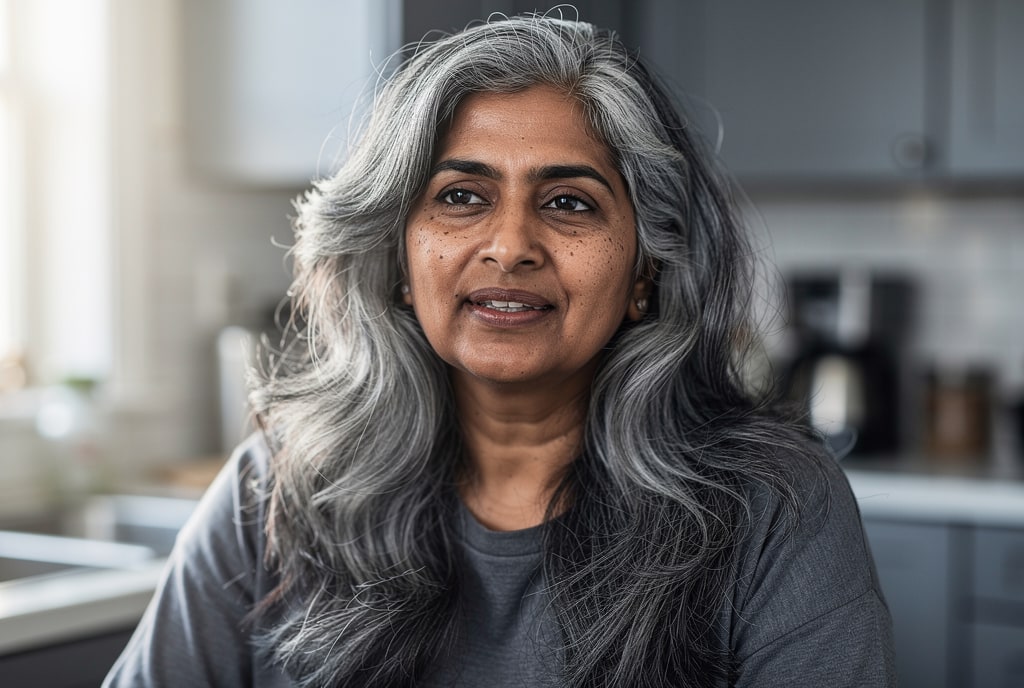
Grey Hair
Transition - Updated July 2026
Build a realistic grey hair grow-out plan with timelines, salon options, trims, care routines, and ways to handle the root line.
Updated July 2026. We revise grey hair grow-out plan when product options, routine advice, or the supporting evidence changes. How we update guides.
A good grey hair grow-out plan turns an emotional wait into a series of manageable decisions. Instead of asking, “How do I survive until the dye is gone?” the plan asks what you want the next month to accomplish: protect the hair, soften the line, remove damaged ends, prepare for a salon appointment, or practice wearing the silver more openly. The transition can still feel slow, but it becomes less random.
The right plan depends on length, previous color, budget, hair health, and your tolerance for contrast. Someone with a pixie cut and soft demi-permanent color may move into full grey quickly. Someone with long dark permanent color may need a year or more, especially if the goal is to keep length. Neither path is a failure. The point is to choose a plan that fits real life rather than chasing a dramatic reveal that leaves the hair compromised.
Before changing color or products, document your starting point. Take photos in indirect daylight from the front, sides, back, and top of the head. Note how many weeks it has been since your last color service. Write down whether your hair has permanent dye, highlights, lowlights, bleach, gloss, henna, or repeated box color. If you are not sure, say that in the salon consultation; unknown history is safer than a guess.
Next, assess condition. Are the ends stretchy when wet? Do they tangle more than the roots? Does old color look warm, opaque, or banded? Does the scalp feel comfortable? A grow-out plan should protect the oldest hair because those lengths may need to coexist with new grey for months. If the ends are already fragile, a plan that depends on heavy lightening may not be realistic.
Finally, decide your non-negotiables. You may want lower salon maintenance, less chemical processing, a softer public transition, or as much length as possible. Put those priorities in order. A plan cannot maximize everything at once. Keeping length often extends the timeline. Softening the line may add salon visits. Avoiding chemical services may mean accepting stronger contrast.
Length changes the emotional pace of a grey hair grow-out. Short hair can move through the visible transition quickly because each trim removes a meaningful percentage of old color. Long hair can feel slower because the roots may look clearly silver while the ends still carry years of dye, highlights, sun exposure, or heat styling. The plan should name that reality at the start so the timeline does not feel like a personal failure.
Color history matters just as much as length. Permanent dark dye often leaves a dense, warm band that cannot be erased gently in one appointment. Old blonde highlights may blend more easily with silver, but the lightened ends may also be porous and quick to grab toner. Red dye can hold warmth stubbornly. Henna and metallic salts need special caution because they can react unpredictably with lightener or oxidative color. If you have used any unknown home color, bring the box name, approximate dates, and photos to a stylist before a major service.
| Starting point | Planning emphasis | Why it matters |
|---|---|---|
| Pixie or short crop | Shape every four to eight weeks | The transition can finish quickly, but the cut must stay intentional. |
| Bob or shoulder length | Trim rhythm plus styling choices | The root line is visible, yet old color can be removed steadily without losing all length. |
| Long hair with permanent dye | Patience, strand tests, and staged trims | The old color may be the limiting factor, not the grey growth itself. |
| Highlighted or balayaged hair | Porosity checks and gentle tone work | Light pieces may support blending but can become dry or muddy if over-toned. |
| Curly, coily, or high-density hair | Detangling, shrinkage, and cut shape | The visual line may be less horizontal, but dryness and uneven old color can show through texture. |
If you are not sure which starting point describes you, choose the most conservative plan for the first eight weeks. That usually means no dramatic color correction, no daily toning, and no large product overhaul. Observe how the grey grows, how the old color behaves after normal washing, and whether the ends can support the length you want to keep. A careful beginning gives you more options later.
There are four common routes: hard grow-out, salon blending, cut-forward transition, and gradual color reduction. A hard grow-out means you stop coloring and let the root line move down. It is the simplest and lowest cost, but it asks you to wear contrast openly. Salon blending uses highlights, lowlights, gloss, or root softening to blur the line. It can look more seamless, but it adds cost and may stress fragile lengths. A cut-forward transition removes old color faster through shorter shapes. Gradual color reduction spaces services farther apart or shifts from permanent coverage to softer demi-permanent work before stopping.
| Route | Best for | Trade-off |
|---|---|---|
| Hard grow-out | Healthy hair, strong contrast tolerance, lower budget | Root line is visible for months |
| Salon blending | Dark old color, public-facing work, softer line goals | Requires appointments and careful hair health checks |
| Cut-forward transition | Damaged ends, willingness to go shorter | Length changes faster than color comfort may |
| Gradual color reduction | Nervous starters, subtle grey percentage | Can prolong the overall transition |
No route locks you in forever. You can begin with a hard grow-out, then add blending at month four. You can plan a cut at month six after seeing the grey pattern. The plan should be firm enough to stop impulsive dye decisions, but flexible enough to respond to what the hair shows you.
The best route is usually the one you can repeat calmly. A dramatic blend that requires appointments you cannot afford will create stress. A hard grow-out that makes you avoid mirrors may not be emotionally sustainable. A short cut that looks chic on someone else may feel wrong if you rely on a ponytail for work, exercise, or sensory comfort. Practical does not mean timid; it means the plan fits the person who has to live with it every morning.
If two routes appeal to you, combine them in sequence rather than trying to do everything at once. For example, you might commit to a hard grow-out for twelve weeks, schedule a consultation, and then decide whether a few face-framing highlights would soften the line. Or you might use gradual color reduction for three appointments, then stop coloring once the contrast is lower. A sequence reduces the pressure to choose a perfect identity on day one.
A good salon appointment starts before you sit in the chair. Write a short transition brief that explains what you want, what you have done to your hair, and what you are unwilling to risk. This is especially useful when you are moving from years of full coverage to a grey grow-out, because the old formula may be more important than the inspiration photo.
Include five details: your last color date, your usual formula if you know it, any home color or henna history, your maximum comfort with length loss, and your top priority for the next three to six months. Then add two photos of your hair in daylight and two examples of grey hair you like. Inspiration photos should be direction, not a demand. Your natural grey pattern, density, old color, and condition will decide what is possible.
During a grey hair salon consultation, ask the stylist to separate cosmetic preference from hair-health risk. Useful questions include: “Would you strand test before lightening?” “What warmth is likely to remain?” “How many appointments might this take?” “What would you do if the ends cannot tolerate more lift?” “How will I maintain this between visits?” A clear answer may not be the most glamorous answer, but it is the answer that protects the transition.
Leave the consultation with a next step you understand. That may be a blending appointment, a trim plan, a gloss, a low-maintenance root softening, or a decision to wait. If the stylist recommends doing nothing for a few weeks, that can still be progress. Sometimes the healthiest salon plan is to let more natural growth appear so the colorist can see the true pattern.

Months one and two are for observation and restraint. Stop automatic touch-ups if that is your goal, take photos every two weeks, and keep the routine gentle. Do not buy a full silver-hair shelf yet. You need to see the actual grey pattern before deciding what it needs.
Months three and four are often when the root line becomes socially visible. Decide whether the contrast feels acceptable. If not, book a grey hair salon consultation rather than attempting repeated home corrections. Ask about strand tests, cost, number of sessions, and whether blending would preserve or weaken the ends.
Months five through eight are the practical middle. Trims matter here because old color at the ends can make the transition look heavier than it is. If you keep length, ask for shape rather than only dusting. Layers, face-framing, or a cleaner perimeter can make the grey pattern look more deliberate. If you use purple shampoo, use it as a tone tool, not as a daily cleanser.
Months nine through twelve are when many people see enough silver to imagine the final look. Reassess your routine. You may need more moisture, less pigment, better heat protection, or a cut that supports the new brightness. Compare photos in the same window light rather than judging by one harsh mirror.
Beyond a year, the plan becomes maintenance. Old color may remain on long ends, but the identity of the hair is clearer. At this point, the question is not “How do I hide the transition?” but “What routine keeps my grey hair bright, soft, and intentional?”
Trims are not just for split ends during a grow-out. They control how much old color remains, where the eye lands, and whether the shape supports the contrast. A one-inch trim every eight to twelve weeks removes old color steadily without forcing a dramatic chop. A larger cut every few months can work if you prefer clear milestones. Very damaged ends may need to go sooner because they make both dyed and grey hair look dull.
Bring your stylist a transition goal, not only a length goal. For example: “I want to keep enough length to tie back, but I am willing to remove the warmest ends over two appointments.” That gives the stylist room to balance shape and progress. If you are cutting at home between appointments, keep it conservative. Uneven self-trims can make banding harder to manage.
During grow-out, one head of hair may contain new grey roots, old permanent color, porous highlighted sections, and natural pigmented strands. Treating all of it the same can backfire. Purple shampoo may brighten the grey but dull brunette ends. Heavy conditioner may soften old color but flatten fine roots. Clarifying may remove film but make fragile lengths feel rough if overused.
Start with a gentle wash routine and conditioner through the lengths. Add a leave-in if detangling is difficult. Use heat protectant whenever you blow-dry, curl, or straighten. If the grey looks yellow, clarify occasionally and then test purple shampoo for grey hair with short contact time. If the ends feel dry, look at grey hair conditioners or leave-ins before assuming you need a more complicated system.
Introduce one change for two to four washes. Keep notes on tone, softness, scalp comfort, and day-two appearance. This sounds slow, but it prevents the common transition spiral: over-clarifying, over-toning, masking, oiling, and heat styling until the hair feels coated and the root line looks harsher.
The grow-out line often looks worse when the routine is inconsistent. A harsh wash, skipped conditioner, rough towel drying, and high heat can make old color look dull and new grey look wiry on the same day. The fix is not an elaborate routine; it is a repeatable base that keeps both parts of the hair cooperative. If you need a fuller sequence, use a grey-specific wash-day routine and simplify from there.
On wash days, focus shampoo on the scalp and let the rinse move through the lengths. Condition the older ends first, then lightly smooth any remaining product near the mid-lengths if your hair tolerates it. Detangle with patience, especially where dyed ends meet newer growth. That boundary can catch because the two sections may have different porosity. Blot with a soft towel rather than roughing up the cuticle.
On heat days, decide what the heat is meant to accomplish. If you want polish for a work event or photo, use heat protectant and keep the tool pass controlled. If you are using heat only because the transition feels unruly, try a lower-heat blow-dry, a bend through the mid-lengths, or an overnight styling method first. Repeated high heat can yellow bright grey pieces and make old color look more opaque.
At night, reduce friction where you can. A loose braid, satin pillowcase, soft scrunchie, or low-tension wrap can help longer hair wake up smoother. This matters during transition because morning frizz can make the root line look more chaotic than it really is. Sleep care is not about perfection; it is about preserving the work your wash day already did.
Styling cannot change the growth rate, but it can change how the transition reads. A side part may reveal less of a strong center stripe. A clean center part may make a silver streak look deliberate. Waves and bends break up horizontal bands. A smoother blowout can look polished, but it also shows every line. Updos can either hide or feature grey at the hairline depending on placement.
Accessories can help without pretending the transition is not happening. A headband, scarf, barrette, or intentional clip can make the grow-out look styled on days when the root line feels loud. The goal is not camouflage at all costs; it is to give yourself options while the color is in motion.
The middle months are often the place where people feel stuck: too much grey to look freshly colored, not enough grey to feel finished. Treat this stretch as a styling phase of its own. A slightly sharper cut, cleaner neckline, face-framing shape, or more consistent part can make the grow-out look like an aesthetic choice rather than a missed appointment.
Clothing and makeup can help, but they do not need to become a second job. Silver hair often reflects nearby color, so a clear neckline, a scarf in a flattering tone, or a lipstick or blush with a little warmth can change the overall impression. If you do not wear makeup, the same principle applies through glasses, earrings, collars, or lighting. The goal is balance: the hair is getting brighter, so the rest of the look may need a little definition.
If the transition is visible at work, choose two reliable styles for high-pressure days. One might be a smooth low bun that shows the silver hairline cleanly. Another might be soft waves that break up the band. Decision fatigue is real during a grow-out. Having a small menu of styles keeps a hard morning from turning into a color appointment you did not actually want.
A hard grow-out may cost very little beyond trims and routine products. Blending can cost much more because it may require multiple color appointments. Toners and glosses need maintenance. Shorter cuts may require more frequent shaping. There is no shame in choosing the lower-cost route, but it helps to name the budget early.
Ask salons for a range before booking a major correction. A useful consultation should cover the expected number of visits, whether a strand test is recommended, how much warmth may remain, and what home care is necessary. If the cost does not fit, ask for the healthiest lower-maintenance alternative. Sometimes that means fewer color services and a stronger cut plan.
Growing out grey can invite comments from people who see the change before they understand the choice. Prepare a simple response so you do not have to defend the plan every time. Try: “I am growing out my natural grey and seeing how it feels.” Or: “I am taking a break from color and focusing on hair health.” You do not owe anyone a long explanation.
If comments trigger the urge to dye the roots immediately, wait forty-eight hours and compare your current photos with your starting photos. Progress is easy to miss when you look every day. The grow-out may still be awkward, but it is probably moving.
Change course if the plan is damaging the hair, irritating the scalp, exceeding your budget, or making daily life harder than expected. Pausing does not mean failing. You might switch from hard grow-out to blending, from long hair to a shorter cut, or from frequent salon work to a slower transition. You might also decide that you prefer coloring. The useful question is whether the choice is deliberate rather than reactive.
Get professional medical advice if greying is sudden, patchy, paired with shedding, or accompanied by scalp pain, scaling, or sores. A cosmetic grow-out plan should not override health signals.
Home care can support a grow-out, but it cannot safely solve every color problem. Strong orange bands, very dark permanent dye, muddy toner, greenish ends, or fragile bleached sections deserve professional judgment. Repeated home correction often makes the eventual salon appointment harder because each layer adds more unknown pigment and more stress to the hair.
Be especially careful with lightener over old color. Grey hair may look bright at the roots, but the dyed lengths are still chemically different. Trying to lift everything to match the roots can expose warmth, create uneven bands, or compromise elasticity. If you want a brighter blend, ask for a strand test and a staged plan. If the hair fails the test, the answer may be trims and patience rather than more chemistry.
Tone problems also need restraint. Purple products are useful for yellow cast, not for every kind of warmth. Orange, red, smoky, dull, or greenish tones may need a different salon approach. When in doubt, clarify gently, condition well, and wait until you can get advice. A calm pause is usually kinder than another corrective layer.
A grow-out plan works better when you decide in advance when you will evaluate it. Without checkpoints, every mirror becomes a referendum on whether you should keep going. Choose three dates: an early checkpoint around eight weeks, a middle checkpoint around four to six months, and a later checkpoint around nine to twelve months. At each point, compare photos in the same light, check hair health, and decide whether the current route still matches your priorities.
At the early checkpoint, ask whether the root line is tolerable and whether your routine is still simple. At the middle checkpoint, ask whether trims are removing enough old color and whether salon blending would make daily life easier. At the later checkpoint, ask whether you are maintaining silver hair or still trying to hide transition. These questions keep the plan practical.
If you are tempted to color everything again, use a waiting rule. Give the feeling a few days, wash and style the hair normally, and look at daylight photos before booking a corrective appointment. Many grow-out setbacks happen after a single stressful comment, a harsh fitting-room mirror, or a bad wash day. A checkpoint protects the larger goal from one bad moment.
A calendar does not need to be complicated. Mark wash days, purple-product days, trims, salon consultations, and photos. Also note irritation, breakage, dullness, and compliments if they matter to you. The goal is not to turn hair into homework; it is to build enough evidence that decisions are not based on memory alone.
For example, if the hair looked bright for two weeks after one purple wash, you know daily pigment is unnecessary. If the ends tangle every time after clarifying, you may need a gentler reset or more conditioning. If the root line bothers you less after a trim, the next appointment can focus on shape before color. A low-effort record makes the grow-out feel less like waiting and more like a sequence of informed choices.
At some point, the grow-out stops being the main story. You may still have old color on the ends, but the visible identity of the hair is grey, silver, white, or salt-and-pepper. That is the moment to shift from transition management to maintenance. The questions become quieter: how often should you clarify, how much conditioning keeps the hair soft, how much tone control is enough, and what cut schedule keeps the shape fresh?
Use your transition notes to build that routine. If your scalp was happiest with gentle cleansing twice a week, keep that rhythm. If purple shampoo worked only when used briefly every few weeks, do not turn it into a habit because the hair is now officially grey. If your ends still carry old damage, keep conditioning them until they are trimmed away. The broader grey hair care map can help you move from grow-out decisions into daily silver maintenance without starting over.
A grey hair grow-out plan works best when it has priorities, milestones, and restraint. Audit your starting point, choose a route, schedule trims, keep product changes simple, and use salon help when old color or damage makes the transition risky. If you want to understand what each visual phase may feel like, read the companion guide to the stages of going grey.
A visible transition often takes six to eighteen months depending on length, growth rate, old color, trims, and whether you use blending services.
A shorter cut can speed the visual transition, but it is optional. Choose it only if the shape fits your lifestyle and you are comfortable losing length.
Avoid repeated box dye, daily purple shampoo, harsh bleaching over fragile ends, and changing several products at once when you cannot judge what helped.
Yes. A no-blend grow-out can work well when hair health, budget, or lower chemical exposure matters most. Plan trims, gentle care, and styling choices that make the contrast feel deliberate.
Keep the shape current, control tone conservatively, use heat protection, and choose parts, waves, clips, or face-framing pieces that make the silver pattern look intentional.
Grey Hair for Men: Transition guidance for grey hair, with practical care steps, salon context, routine choices, and confidence-focused next steps.
The Grey Hair Blending Phase guidance for grey hair, with practical care steps, salon context, routine choices, and confidence-focused next steps.
Confidence While Going Grey guidance for grey hair, with practical care steps, salon context, routine choices, and confidence-focused next steps.
Grey hair care notes — transition tips, science, and silver routines